
Showing all 31 results
-
Original price was: $249.00.$109.00Current price is: $109.00. View Product
-
Original price was: $219.00.$119.00Current price is: $119.00. View Product
-
Original price was: $199.00.$179.00Current price is: $179.00. View Product
-
Original price was: $219.00.$119.00Current price is: $119.00. View Product
-
Original price was: $249.00.$99.00Current price is: $99.00. View Product
-
Original price was: $249.00.$99.00Current price is: $99.00. View Product
-
Original price was: $249.00.$119.00Current price is: $119.00. View Product
-
Original price was: $13.21.$9.00Current price is: $9.00. View Product
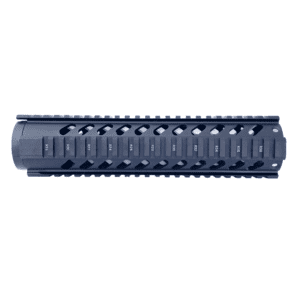
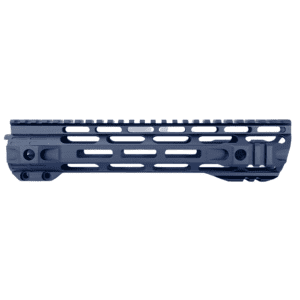
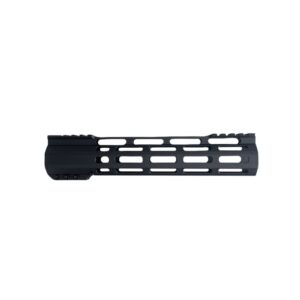

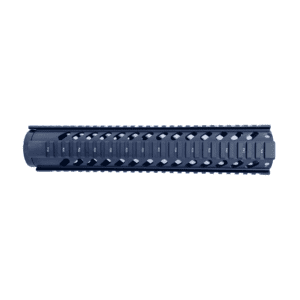
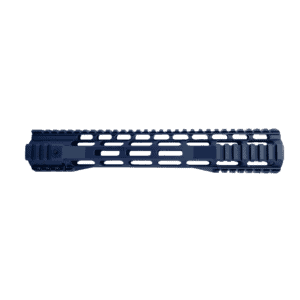


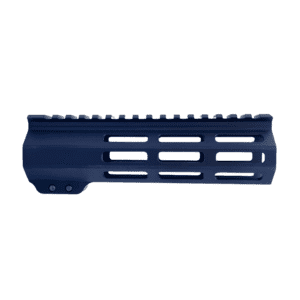
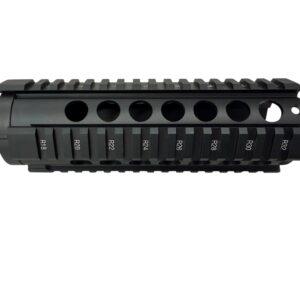
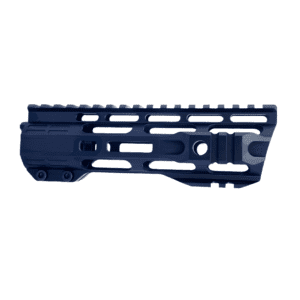
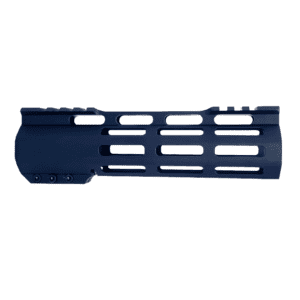
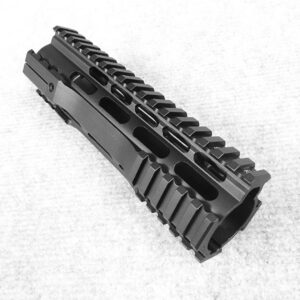
-300x300.png "15' Gen1 Free Float Quad Rail, photo")
Showing all 31 results
How to Choose the Ideal Handguard for Your AR 15 or AR 10 Build
Choosing the right AR handguard for your build can be a complex process as some rifle parts, like your handguard, are critical to your rifle’s performance and function. The handguard also shapes your rifle’s ergonomics, accessory compatibility, and even its overall handling. Here are the important aspects to think about when choosing your AR 15 handguard or AR 10 handguard.
Consider Your Rifle’s Purpose
This will depend on your preferred application of your rifle. For a rifle that you intend to be very tactical, that is, for home defense or in law enforcement, you may want a lighter AR handguard that lets you maneuver your weapon better. For a long-distance rifle or precision shooting, you may not really consider the weight but value a stiffer, heavier AR 15 handguard for accuracy.
In selecting AR handguards, you are ultimately pursuing the same ballistic properties through different materials and designs and achieving results of varying degrees of success. Yet for recreational shooters, comfort and, again, managing recoil will also come into play. An excellent handguard will dissipate heat more effectively over extended shooting sessions, and this alone can keep you in the game longer by working with your firearm to maintain your grip.
Free-Float vs. Drop-In Handguards
These are the major differences between free-float and drop-in handguards.
Free-float handguards don’t come into contact with the barrel, preserving harmonics for added accuracy through the re-leveling point. These kinds of handguards are favored by accuracy-minded shooters, especially long-distance shooters. As such they are usually more expensive and more difficult to install.
Drop-in handguards are cheaper and easier to install, fastened in place with the delta ring assembly. Your average AR user will look to the drop-in handguard as a more economical choice. While a drop-in handguard might not be as accurate as a free-float unit, it’s a practical solution for the majority of AR 15 handguards or AR 10 handguards you’ll find on a home-defense firearm or someone’s target-shooting rifle.
Handguard Length and Gas System Compatibility
A pistol-length gas system will go well with a shorter handguard, and a rifle-length gas system will go well with a longer handguard. If you have a mid-length or carbine-length gas system, then you should make sure your new handguard is long enough to go all the way from the front of the gas tube to the front sight post, encompassing the gas tube and protecting it without interfering with its operation.
Plus, make sure any AR 15 quad rail or other handguard you choose will work with the size and configuration of your rifle. A mismatch could end up looking as much as operating incorrectly. Match a correctly sized handguard and AR quad rail for optimal results.
Material and Weight
Materials also affect both the longevity and handling of the handguard. Aluminum handguards are tough, and they are able to dissipate heat well, which makes them a good all-purpose choice. That said, carbon-fiber handguards are lightweight and extraordinarily strong, making them a good choice for shooters who might be holding a rifle for hours and want to reduce the weight they must manage.
A lighter variety of AR 10 and AR-15 handguards are ideal for free-movement applications, like those you find in tactical missions or competitions involving more movement, for example. More heavyweight handguards ar 15 might be fit for bench rest shooting or a tactical approach that doesn’t engender as much movement.
Accessory Mounting Options (M-LOK vs. KeyMod)
If you want to use accessories such as lights, grips, or lasers with your handguard, then it’s important to choose a mounting system, either M-LOK or KeyMod, that will allow you to do so easily.
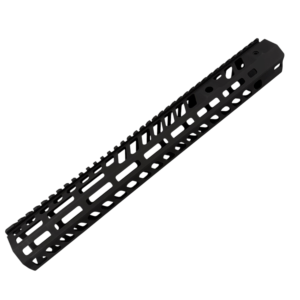
M-LOK is the newer standard and is well known for its strength and simplicity.
KeyMod is slightly older but still has good accessories and is still a favorite of some shooters.
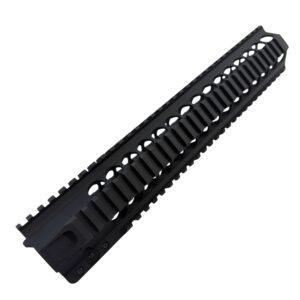
Traditional quad rails for AR 15 builds offer more mounting options for accessories, but more weight than M-LOK or KeyMod systems.
If you are looking for the best AR-15 handguard or the best AR-10 handguard, you need to think about the rifle’s purpose, benefits of free-float vs. drop-in systems, gas system, and what affects it, material, and weight. All of these factors are really relevant in creating the best handguard for your build, whether you are using a complete rifle, an upper receiver, or just a stock lower receiver. Buying the right handguard for your AR will make it perform all the better and will remove all the frustration of knowing that the rifle just doesn’t quite feel right in the way that it needs to for your intended purpose.
Frequently Asked Questions
What is the difference between a free float and a drop-in handguard?
Among common AR-15 handguard types, the biggest difference is how the rail is mounted. A drop-in setup works with the standard delta ring arrangement, while a free-float handguard mounts at the barrel nut and stays off the barrel. That is why free-float rails are often chosen for a cleaner front end and more usable rail space.
How do I choose the right handguard for my AR-15?
The right AR-15 handguard depends on what is already on the rifle and what the build is supposed to do. Length, rail style, weight, and front sight or gas block setup all matter. A rail that works on a simple carbine is not always the right fit for a different front-end layout.
What handguard length should I choose?
Handguard length should match the front end, not just the look of the rifle. A longer AR 15 handguard gives you more reach and more mounting room, but it still has to work with the gas system and whatever sits at the front of the upper.
What is better for an AR build, M-LOK or quad rail?
Many current AR-15 handguards lean toward M-LOK because the profile stays slimmer and cleaner. Quad rail still makes sense when the build needs fixed rail space on all sides and weight is less of a concern.
Are AR 15 handguards universal?
No. AR 15 handguards are not universal, because fit depends on the mounting system, barrel nut arrangement, and the rest of the front-end setup. The same general issue comes up with AR 10 handguards as well, since platform details still affect compatibility.
How to measure AR-15 handguards?
Most AR handguards are measured by overall rail length. That number matters because the handguard still has to line up with the gas system and front-end components instead of simply covering as much barrel as possible.
How to install AR 15 handguard?
Installation changes with the AR handguard types involved. A drop-in rail is usually more straightforward. A free-float setup is a different job, since it involves the barrel nut and a more exact fit around the upper.
How to remove a handguard on an AR 15?
Removal depends on how the rifle is built. An AR 15 handguard in a standard drop-in format comes off differently than a free-float rail, and the process can also change if the upper uses a fixed front sight base or a low-profile gas block.