
Showing all 15 results
-
Original price was: $99.00.$30.00Current price is: $30.00. View Product
-
Original price was: $39.00.$29.00Current price is: $29.00. View Product
-
Original price was: $8.00.$4.99Current price is: $4.99. View Product
-
Original price was: $66.13.$59.00Current price is: $59.00. View Product
-
Original price was: $26.45.$18.99Current price is: $18.99. View Product
-
Original price was: $39.95.$39.00Current price is: $39.00. View Product
-
Original price was: $104.46.$49.00Current price is: $49.00. View Product
-
Original price was: $171.97.$119.00Current price is: $119.00. View Product
-
Original price was: $14.99.$9.99Current price is: $9.99. View Product
-
Original price was: $19.99.$9.99Current price is: $9.99. View Product
-
Original price was: $39.00.$29.00Current price is: $29.00. View Product




Showing all 15 results
Choosing an AR15 Stock, Brace, or Grip
Start with the part itself. An AR 15 stock is mainly a question of rear-hardware fit, length, and adjustment. A grip changes hand position on the lower. Braces use their own mounting designs and dimensions.
AR15 Stocks: Fixed and Adjustable Options
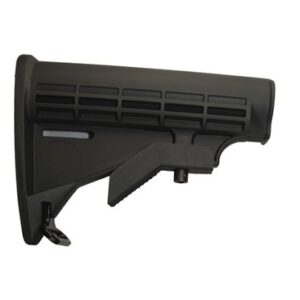
The basic choice is fixed or adjustable. An AR15 stock made for an adjustable carbine setup moves through several positions. An AR15 fixed stock does not use that sliding adjustment.
Length of pull is one difference, but not the only one. Stock bodies also vary in width, cheek surface, weight, and sling attachment points.
- A slim stock keeps the rear profile smaller.
- A wider body gives more cheek contact.
- QD sockets and sling loops are not placed the same way on every model.
- Rear-hardware fit matters. A stock made for one receiver-extension setup is not automatically a match for another.
With an AR 15 adjustable stock, changing positions also changes the distance from the trigger to the back of the stock.
AR15 Pistol Braces: Design and Fit
An AR15 pistol brace can have a compact skeletonized shape or a larger adjustable body. The visible shape is only part of the difference.
The mounting interface matters more for fit. An AR 15 brace made around one receiver extension or attachment system may not mount on another setup. That information comes from the specifications for the brace, not from its appearance.
AR15 Pistol Grips: Angle, Shape, and Texture
An AR15 grip changes where the hand sits and how the wrist is positioned. A more vertical angle feels different from the traditional A2-style shape.
Width is noticeable too. A fuller backstrap fills more of the hand, while a narrow profile leaves less material behind the grip. Texture ranges from simple molded patterns to rougher or rubberized surfaces.
Some AR15 pistol grip designs add a beavertail, finger grooves, or storage inside the grip. None of those features is universal.
An AR-15 pistol grip also needs enough clearance around the lower receiver’s grip area, particularly on receivers with unusual exterior geometry.
Frequently Asked Questions
What Is the Difference Between a Fixed and Adjustable AR15 Stock?
A fixed stock stays at one main length. An adjustable stock slides through several positions and gives a range of length-of-pull settings.
What Does Length of Pull Mean on an AR15 Stock?
It is the distance from the trigger to the back of the stock. Moving an adjustable stock changes that measurement.
Does Grip Angle Matter on an AR15 Pistol Grip?
Yes. A different angle changes wrist position and the way the hand sits behind the trigger.
Will Any AR15 Pistol Grip Fit Any AR15 Lower?
Many use the familiar AR15 grip mounting arrangement. Unusual or proprietary lower geometry can create exceptions.
What Determines Whether an AR15 Pistol Brace Fits?
The attachment system. The brace needs to match the receiver extension or other interface specified for that model.