The AR-15 trigger is one of the most noticeable parts of the rifle because it affects feel, consistency, and shooter confidence. A cleaner trigger press can make the rifle feel more predictable, but trigger choice should always start with reliability and safety, not the lightest possible pull. This guide compares the main AR-15 trigger types, including single-stage, two-stage, and drop-in options, along with pull weight, reset, creep, overtravel, shoe shape, compatibility, and use-case fit.
The first thing to get clear: single-stage and two-stage describe how the trigger feels during the press. “Drop-in” describes the trigger’s form factor.
Start With the Basics: What an AR-15 Trigger Actually Does
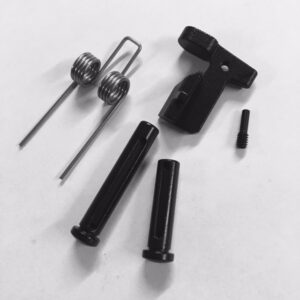
An AR-15 trigger is part of the fire control group in the lower receiver. Related parts include the trigger, hammer, springs, pins, and safety selector. This article is not an installation guide, but it helps to know that the trigger works as part of a system.
A better trigger can improve consistency and control. It may reduce rough movement, create a cleaner break, or provide a more predictable trigger reset. It does not replace safe handling, training, quality ammunition, optics, barrel quality, or proper assembly.
A common mistake is assuming lighter always means better. A very light trigger may fit a narrow use case, but for most rifles, safe engagement and a predictable feel matter more. Before choosing an AR-15 trigger upgrade, decide whether your priority is general reliability, precision, competition feel, hunting use, or a simple range improvement.
Stage vs Form Factor: The Key Difference Most Buyers Miss
Many buyers compare single-stage, two-stage, and drop-in triggers as if all three are the same kind of category. They are not.
Single-stage and two-stage describe the press. Drop-in describes the format. A drop-in AR-15 trigger can be single-stage or two-stage. A traditional component trigger can also be single-stage or two-stage.
Think of it this way:
- Single-stage: one continuous press to the break.
- Two-stage: initial take-up, a defined wall, then the break.
- Drop-in: a contained or cassette-style trigger unit.
- Mil-spec/component trigger: separate trigger, hammer, springs, and pins.
So when comparing single-stage vs two-stage trigger options, do not treat drop-in as a third stage type. First, choose the feel you want. Then choose the construction format that fits your lower receiver, comfort level, and build goals.
Trigger Feel Terms You Should Know Before Comparing Options
Trigger descriptions are easier to compare once the basic terms are clear.
- Pull weight: the pressure needed to fire.
- Break: the moment the trigger releases.
- Creep: movement before the break that may feel rough or inconsistent.
- Overtravel: rearward movement after the break.
- Reset: the point where the trigger is ready for another press.
- Wall: the defined stopping point before the second stage breaks.
- Trigger shoe: the part your finger contacts, usually curved or flat.
Trigger feel is partly personal. The right trigger is the one that gives a safe, repeatable, predictable press for the rifle’s intended lawful use.
Single-Stage AR-15 Triggers
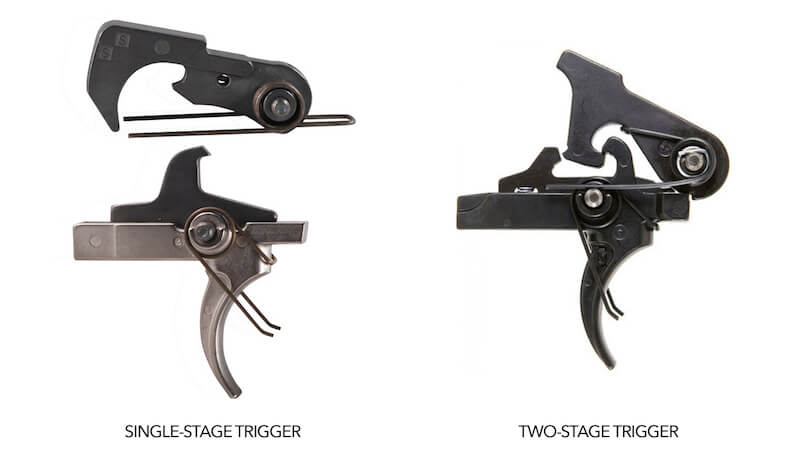
A single-stage AR-15 trigger has one continuous press until the break. There is no intentional first-stage take-up and no defined intermediate wall. If you are wondering what a single-stage trigger for an AR-15 is, that is the basic idea: one press, one break.
The appeal is simplicity. Many AR-15 owners like the direct feel because it is familiar and easy to understand. A clean single-stage trigger can work well for range use, general-purpose rifles, hunting setups where the shooter prefers a direct break, and some competition formats where the chosen setup is allowed.
The trade-off is that a single-stage trigger gives less opportunity to “prep” against a wall before a deliberate shot. Very light versions also need to be matched carefully to the rifle’s role. Lower-quality examples may feel gritty, heavy, or inconsistent. A clean break matters more than chasing the lowest pull weight.
Single-stage triggers often make sense for:
- Recreational range builds.
- General-purpose rifles with a safe, predictable pull.
- Competition-oriented builds where rules allow the setup.
- Hunting setups where the shooter prefers a direct break.
Buyers searching for the best single-stage AR-15 trigger should focus on reliability, compatibility, and safe feel rather than brand hype.
Two-Stage AR-15 Triggers
A two-stage AR-15 trigger separates the press into two parts. The first stage is the initial take-up. Then the shooter reaches a defined wall. The second stage is the final press through the break. If you are asking what a two-stage trigger AR-15 is, that take-up, wall, and break sequence is the key difference.
The strength of this design is the more deliberate feel. Some shooters like being able to settle at the wall before completing the press, especially on precision-focused rifles. A two-stage AR-15 trigger is often considered for SPR/DMR-style builds, hunting or varmint rifles, and controlled range shooting.
It is not automatically better than a single-stage trigger. Some shooters do not like staging the trigger. Poor-quality two-stage triggers can also feel mushy, vague, or inconsistent. That defeats the purpose of choosing a defined wall in the first place.
Two-stage triggers often make sense for:
- Precision-focused AR-15 builds.
- SPR or DMR-style rifles.
- Hunting or varmint setups where deliberate shot placement matters.
- General-purpose builds for users who prefer a defined wall.
When comparing AR-15 two-stage trigger vs single-stage options, start with the feel you want. A single-stage trigger feels more direct. A two-stage trigger gives you take-up, a wall, and then the break.
Drop-In AR-15 Triggers
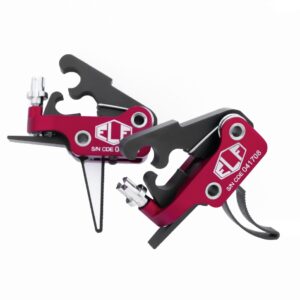
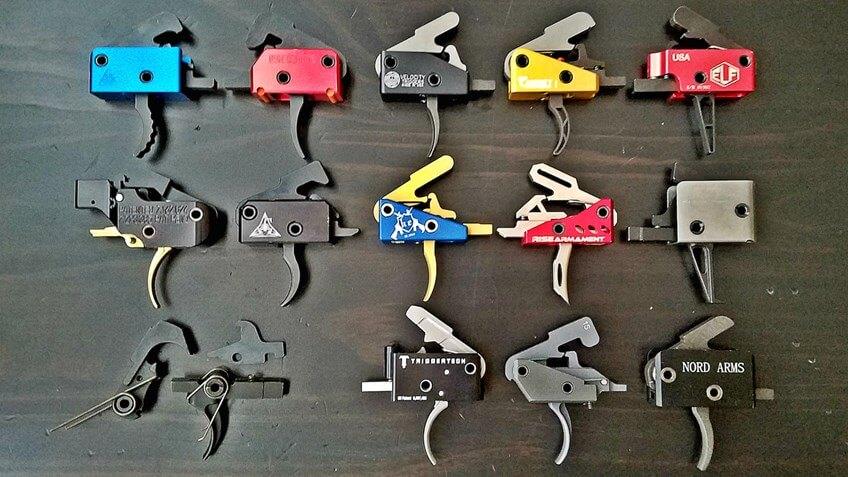
A drop-in trigger is usually a self-contained trigger assembly or cassette-style unit. It is designed as a contained upgrade format compared with separate fire control group components. It is not a third-stage type.
That distinction matters. A drop-in trigger can still be single-stage or two-stage. Buyers need to choose both the format and the press feel.
The appeal is that the fire control parts are packaged into a contained unit with a factory-set feel. For buyers comparing an upgrade, that can make options easier to understand by pull weight, reset feel, trigger shoe, and intended role. Drop-in triggers are also common choices for users, replacing a gritty or heavy factory-style trigger.
The trade-off is compatibility. Drop-in does not mean universal fit. Some designs may require specific pins or anti-walk/anti-rotation considerations from the manufacturer. Dirt, debris, maintenance access, and long-term serviceability can also vary by design.
Drop-in triggers often make sense for:
- Buyers who want a contained upgrade format.
- Range, competition, or precision builds where a consistent feel is desired.
- Users are replacing a gritty or heavy factory-style trigger.
- Builders compare options by feel, pull weight, shoe style, and stage type.
The safest way to compare drop-in triggers is to treat them as a format first, then decide whether the press should be single-stage or two-stage.
Traditional Component Triggers vs Drop-In Cassettes
Traditional component triggers use separate parts, including the hammer, trigger, springs, and pins. They are common in standard AR-15 lower parts kits and many factory-style setups. They can be simple, durable, and serviceable, but quality varies widely.
Drop-in/cassette triggers use a self-contained assembly. They are often chosen for a cleaner factory-set feel or easier upgrade selection. A cassette-style trigger can be single-stage or two-stage, but the buyer still needs to confirm receiver fit, pin guidance, and safety selector compatibility.
Neither format is automatically superior. The right choice depends on compatibility, safety, use case, and preferred trigger feel.
For comparison shopping, browse AR-15 triggers together with related AR-15 lower receiver parts so the trigger choice fits the rest of the lower receiver system.
Pull Weight: Why Lighter Is Not Always Better
Pull weight affects how deliberate the press feels. A lighter trigger may feel easier to press, but that does not make it right for every rifle.
Very light triggers are usually better suited to controlled range or competition use, depending on rules and manufacturer guidance. For general-purpose rifles, reliability and safe engagement should carry more weight in the decision. A heavier trigger with a smooth, predictable break can be better than a lighter trigger with rough movement or inconsistent feel.
For precision or hunting, a clean break may matter more than raw lightness. For any lawful use, the trigger should support safe, repeatable control. NSSF emphasizes safe handling as the foundation of firearm use, and that same safety-first mindset should apply when selecting trigger components. (NSSF)
Do not cut springs, polish engagement surfaces, alter sear engagement, or rely on shortcuts to chase a lighter pull. If unsure, follow manufacturer guidance or consult a qualified gunsmith.
Curved vs Flat Trigger Shoes
The curved vs flat trigger choice is mostly about feel.
A curved trigger is traditional. It naturally centers the finger and feels familiar to many AR-15 owners. A flat trigger has a straighter face and may feel more consistent across different finger placements.
Shoe shape can change the perceived pull feel even when the measured pull weight is the same. Neither shape is universally better. Choose the one that helps you place your finger consistently and press the trigger safely.
Compatibility Checklist Before Choosing an AR-15 Trigger
This is a buyer-facing checklist, not an installation guide.
- Confirm AR-15 vs AR-10 compatibility.
- Check the lower receiver pattern and pin size.
- Confirm safety selector compatibility.
- Consider caliber and ammunition, especially if using harder primers.
- Check whether the trigger maker recommends specific pins or anti-walk/anti-rotation hardware.
- Read the manufacturer’s instructions.
- Use a qualified gunsmith if unsure.
- Perform only manufacturer-recommended safety and function checks.
For broader build planning, compare individual lower components, AR-15 lower build kits, or complete lower receivers before assuming every part will match.
Safety and Legal Considerations
Trigger changes should be treated seriously. Do not modify sear engagement, cut springs, polish engagement surfaces, defeat safeties, or attempt improvised trigger work. Do not rely on online shortcuts for trigger modifications.
Also, verify federal, state, and local laws before buying or modifying firearm components. Binary triggers, forced-reset triggers, auto sears, switches, and machinegun conversion devices are separate legal categories and outside the scope of this article. ATF notes that some states independently prohibit forced-reset triggers or trigger-activating devices, so buyers should rely on current official guidance and local law before making compliance decisions. (ATF)
This article is not legal advice. Manufacturer instructions, current official guidance, and applicable law should control any compliance decision.
Best AR-15 Trigger Type by Use Case
| Use Case | Practical Direction |
| General-purpose AR-15 | Quality single-stage or two-stage with a moderate, predictable pull. Reliability and safe engagement come first. |
| Precision, SPR, or DMR-style build | A two-stage trigger is often a strong fit because of the defined wall and clean break. |
| Competition or range use | Single-stage or drop-in single-stage options can be appealing, but match rules and safety margin still matter. |
| Hunting or varmint setup | Single-stage or two-stage can work. Consider gloves, weather, reliability, and a predictable break. |
| Budget or first-time build | Start with a reliable mil-spec trigger or enhanced component trigger, then upgrade after learning what feels you prefer. |
| Simple upgrade path | A drop-in trigger may fit buyers who want a contained format, as long as fitment and instructions are confirmed. |
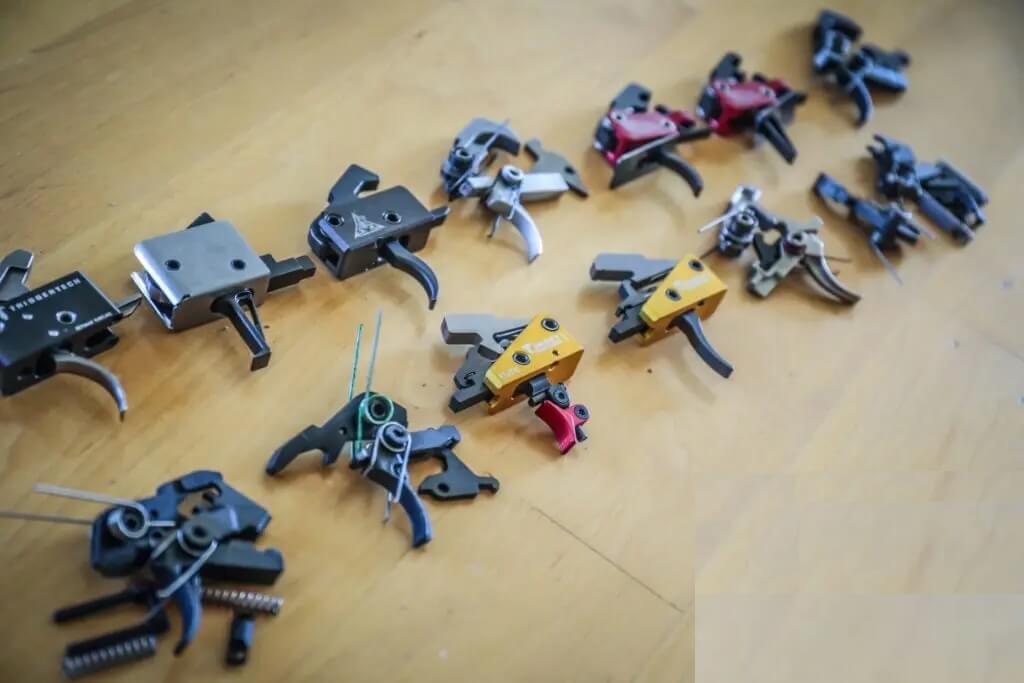
This is the practical way to choose the best AR-15 trigger for your use case: match the trigger feel, construction style, compatibility, and safety margin to the rifle’s role.
Common Mistakes to Avoid
- Treating “drop-in” as a third trigger stage instead of a construction format.
- Choosing the lightest trigger available without considering the use case.
- Ignoring trigger reset, trigger creep, and overall feel.
- Assuming every AR-15 trigger fits every AR-10 or large-frame lower.
- Forgetting about hard-primer ammunition and reliable ignition.
- Skipping manufacturer instructions or professional help.
- Modifying trigger surfaces or springs to chase a lighter pull.
- Buying based on hype instead of intended use.
Quick Decision Flow
Use this as a simple starting point before comparing specific trigger models:
- Want one continuous, direct press? Start with a single-stage trigger.
- Want a defined wall before the break? Consider a two-stage trigger.
- Want a self-contained upgrade format? Look at drop-in triggers, then choose single-stage or two-stage.
- Building for precision? Give two-stage options serious consideration.
- Building for competition or range use? Compare reset, feel, rules, and safety margin.
- Building a general-purpose rifle? Prioritize reliability, safe engagement, and a predictable feel.
- Still unsure? Start with a quality general-purpose trigger and avoid extreme pull weights.
Key Takeaways for Choosing the Right AR-15 Trigger
Single-stage means one direct press. Two-stage means take-up, wall, then break. Drop-in means construction format, not stage type.
Pull weight is only one part of the decision. Break quality, reset, creep, shoe shape, compatibility, reliability, and intended use all matter. SAAMI’s standards work emphasizes safety, reliability, and interchangeability, which is a useful reminder that component choices should be judged as part of a safe, functioning system. (SAAMI)
Choose by use case, not hype. When in doubt, follow manufacturer guidance or consult a qualified gunsmith. BrowseAR-15/AR-10 parts and related lower receiver categories to compare options that match your build goals.
FAQ
What is a single-stage trigger for an AR-15?
It is a trigger with one continuous press until the break, without a separate first stage or defined wall.
What is a two-stage trigger AR-15?
It has initial take-up, a defined wall, and then the final break. Many shooters like it for deliberate, controlled shooting.
Is a single-stage or two-stage trigger better for an AR-15?
Neither is universally better. The answer to the two-stage vs single-stage trigger AR-15 depends on the rifle’s role and the shooter’s preference.
Can a drop-in AR-15 trigger be two-stage?
Yes. Drop-in refers to the assembly style, not the stage type. Drop-in triggers can be single-stage or two-stage.
What AR-15 trigger pull weight is best?
There is no single answer. A safe, predictable pull matters more than choosing the lightest option.
Will an AR-15 trigger fit an AR-10?
Sometimes, but not always. Fit can vary by receiver pattern and trigger design, so check manufacturer specs before purchase.
Should I install an AR-15 trigger myself?
Follow the manufacturer’s instructions exactly and use a qualified gunsmith if unsure. This guide focuses on choosing a trigger, not installation steps.