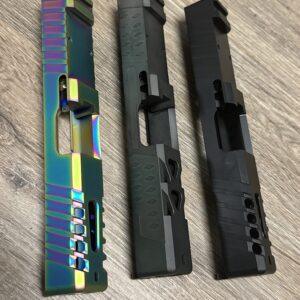
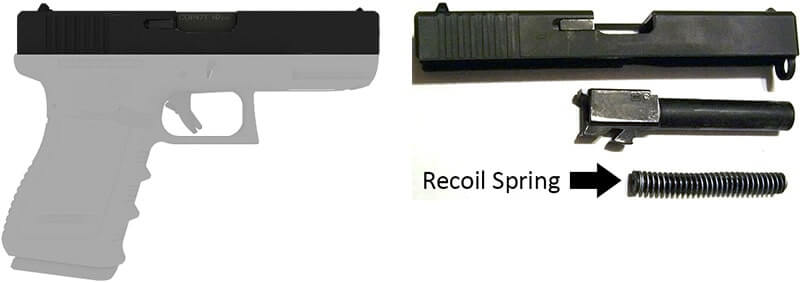
This article focuses on practical decision-making, not disassembly. It explains when Glock recoil spring replacement makes sense, how spring weight changes cycling, and why fitment by model and generation matters as much as the number printed on the package.
A recoil spring is easy to underestimate because it usually fails slowly, not suddenly. But it has a direct impact on how the slide cycles, how confidently the gun returns to battery, and how consistent feeding and ejection feel over time. When that timing drifts, people often blame ammo, magazines, or “the gun being picky,” even though the spring may be the real cause.
Quick summary
- Treat the recoil spring as a timing part, not just a recoil part.
- Watch for repeatable symptoms, not a single round-count rule.
- Too light and too heavy can both cause reliability issues.
- OEM-style is the safest baseline for most owners.
- Confirm the model and generation before you buy anything.
What a Glock recoil spring actually does
A Glock recoil spring (often as a recoil spring assembly) manages slide movement in both directions. Under recoil, the slide moves rearward, the spring compresses, and the system extracts and ejects. Then the spring drives the slide forward, strips a round from the magazine, chambers it, and helps the slide close into full lockup.
In plain terms, the spring affects:
- Rearward slide speed (how quickly the slide moves back)
- Forward return (how decisively it closes)
- The timing window on which feeding and ejection depend
- How tolerant the pistol feels across different ammo
If the spring is tired or mismatched, the slide can cycle “out of rhythm.” That’s when you get symptoms that feel random, even though they usually follow a pattern.
When to replace a Glock recoil spring
There isn’t one universal number that applies to every shooter and every Glock. Usage matters. Ammo matters. Heat matters. The cleanest rule is: if the gun’s behavior changes in a repeatable way and magazines and ammo have not changed, the spring becomes a reasonable suspect.
Common signs your recoil spring may be wearing out
Look for patterns you can describe, not one-off anomalies:
- Inconsistent ejection with ammo that used to be stable
- Occasional failure to return to battery (the slide stops slightly short of full lockup)
- Feeding issues that appear across multiple known-good magazines
- The slide suddenly feels abnormally abrupt or oddly weak
- High round count with unknown maintenance history
Full-size pistols often telegraph spring wear first, so it’s common to see people look up Glock 17 recoil spring replacement when the slide starts feeling sharper or ejection becomes less consistent. With compacts, the clue is often subtler, and Glock 19 recoil spring replacement searches usually follow intermittent return-to-battery hiccups that show up after a long stretch of normal function.
Why is the round count only part of the answer
Round count is useful as a reminder, but not as a diagnosis. Springs wear differently depending on:
- Ammo pressure and consistency
- How often the pistol is shot in long, hot sessions
- Storage and environmental conditions
- The specific model and generation design of the recoil spring assembly
If you have symptoms, that matters more than any generic “replace at X rounds” statement. If you do not have symptoms and the gun runs normally, it is usually smarter to confirm correct fitment and baseline parts before making changes.
Glock recoil spring weight basics
Spring weight is often talked about as a “recoil tuning” trick. In reality, it’s more accurate to treat it as a timing lever. Change the spring weight, and you change how the slide moves rearward and forward.
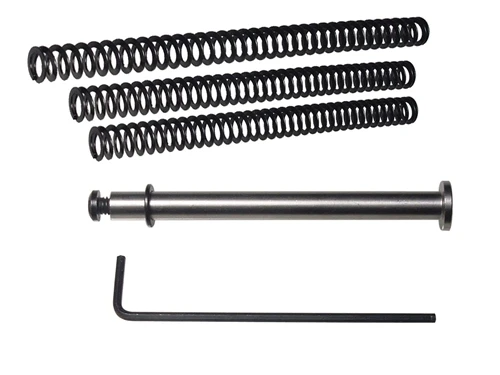
What recoil spring weight means
Spring weight is usually expressed in pounds. The simplest way to think about it:
- A heavier spring means more resistance rearward and more force returning forward.
- A lighter spring means less resistance rearward and less force returning forward.
That changes the slide’s timing window, which is why spring weight choices can help in specific situations and cause problems in others.
Light vs. standard vs. heavy recoil springs
Most Glock owners do best with a standard baseline, then adjust only if there is a clear reason. This table is a quick way to understand the tradeoffs without overloading numbers.
| Spring setup | What it tends to change | When it can make sense | Common reliability risk |
| Lighter-than-standard | Slide cycles easier and faster | Very soft ammo, some tuned competition setups | Slide can run too fast, leading to timing issues |
| Standard / OEM-style | Balanced cycling and return to battery | Range use, carry, home defense, troubleshooting baseline | Not optimized for niche tuning goals |
| Heavier-than-standard | More resistance and a stronger return | Hotter ammo, specific tuning goals | Short-stroking with softer ammo |
If your goal is reliability, “standard first” is usually the smartest approach.
How recoil spring weight affects Glock reliability
Reliability is about timing. Weight changes timing. That’s the whole story, just applied differently depending on which direction you go.
What can happen if the spring is too light?
A spring that’s too light can let the slide cycle faster than the system expects. That can show up as:
- Feeding that becomes less consistent, especially with marginal magazine springs
- The slide outrunning the magazine in certain conditions
- A cycle that feels “busy” with hotter loads
- Return-to-battery consistency that becomes more sensitive to small variables
It can be frustrating because the gun may still run “most of the time,” which makes the problem feel random.
What can happen if the spring is too heavy?
A spring that’s too heavy can create the opposite failure mode. With weaker ammo, the slide may not travel far enough or may not behave consistently. That can show up as:
- Short-stroking
- Weak or inconsistent ejection
- Failures to lock back reliably
- Malfunctions that look like ammo sensitivity
If a pistol becomes picky only after a spring change, timing is the first place to look.
Why OEM weight is the safest starting point
For most owners, the safest baseline is an OEM-style spring assembly matched to the gun. That baseline is designed to work across normal ammo variability and typical real-world use.
This is especially true for carry or defense guns, where reliability matters more than experimentation. Tuning can be valid, but only when you have a clear goal and you test enough to trust the result.
Model and generation fitment matter more than many buyers think
Fitment errors are one of the most common sources of “mystery” reliability issues. Different Glock models use different recoil spring assemblies, and generation changes can involve different designs and dimensions.
Why fitment is not one-size-fits-all
Full-size and compact models are not interchangeable in this area. That’s why discussions around Glock 17 recoil spring weight don’t automatically translate to smaller frames or different generations.
For the Glock 19 line, it also matters which generation you’re working with. People often search for Glock 19 Gen 3 recoil spring weight because older patterns and assemblies are commonly referenced in legacy setups and parts discussions.
Later designs can behave differently, which is why Glock 19 Gen 5 recoil spring weight comes up when owners are comparing feel and function across generations.
A note on mixed-generation builds
Mixed-generation setups add another layer of risk because compatibility details can create symptoms that look like spring or ammo issues. If your pistol mixes generations, be extra cautious about assuming a spring change is the answer.
If you’re in that situation, mixed-generation Glock fitment is a useful reference point because it covers compatibility details that can mimic cycling problems.
OEM vs. aftermarket recoil spring assemblies
This is where the “upgrade everything” mindset causes trouble. Aftermarket can be useful, but most shooters are better served by starting at baseline.
When OEM-style makes the most sense
OEM-style is typically the best choice when you want predictability:
- Carry
- Home defense
- General reliability
- Troubleshooting baseline
If the pistol is a “must work” gun, boring is a feature.
When the aftermarket may make sense
Aftermarket can make sense with a clear reason:
- Competition with consistent ammo and a specific cycle goal
- Tuned builds where other changes alter slide dynamics
- Specialty ammo that sits outside normal expectations
- Experienced users who understand the tradeoffs and test thoroughly
The key is a specific goal, not guesswork.
The biggest mistake buyers make
The biggest mistake is buying by imitation or guesswork. Close seconds:
- Changing the spring weight before confirming the correct model and generation fitment
- Assuming every malfunction is spring-related
- Stacking multiple changes at once and losing the ability to diagnose
When reliability is the priority, returning to baseline is often the fastest way to stop chasing symptoms.
Choosing the right recoil spring setup for your use case
Use cases are the easiest way to keep spring choices sane. A range toy, a carry gun, and a tuned setup don’t need the same level of conservatism.
- For range use: Start with an OEM-style baseline, then change one variable at a time if you have a clear reason. Test with the ammo you actually shoot most, not just a single box of “hot” loads. If the gun runs fine, you usually don’t gain anything by chasing weight changes.
- For carry or home defense: Reliability comes first. OEM-style assemblies are the safest baseline because they’re built to tolerate normal variation. If you’ve been experimenting and the pistol starts to feel inconsistent, returning to baseline parts is often the fastest way back to confidence.
- For tuned or specialty builds: If you’re running a compensator, a significantly altered slide, or a very specific load, tuning can be legitimate. Do it in small steps, document what changes, and don’t trust it until it runs consistently. The goal is a stable function, not a “magic” spring number.
- For troubleshooting reliability issues: Reduce variables before you tune. Use known-good magazines, consistent ammo, and a baseline recoil spring assembly that matches your exact model and generation. If you start changing weight while other variables are unknown, you can hide the real cause instead of fixing it.
Quick buyer checklist before ordering
- Confirm the model
- Confirm the generation
- Decide: OEM-style baseline or tuned setup
- Confirm the caliber
- Match the spring to your ammo and use case
- Don’t assume another Glock uses the same assembly
If you’re looking for a separate topic on slide traction and handling changes (not recoil timing), the Glock slide cuts and serrations guide keeps that discussion separate instead of mixing it into recoil spring diagnosis.
Final takeaway
The recoil spring is a small part with a big reliability role. Replacement timing matters. Spring weight changes slide timing in ways that can help or hurt. Springs that are too light and too heavy can both cause problems. For most Glock owners, an OEM-style assembly is the safest baseline, especially for carry guns. And correct fitment by model and generation matters as much as spring choice.
If you’re choosing a replacement or troubleshooting reliability, start by confirming your exact model and generation, then browse Glock-compatible parts for recoil spring assembly options and other Glock baseline components.
FAQ
What happens if a Glock recoil spring is too light?
The slide can cycle too fast, which can reduce control over timing and lead to feeding or chambering inconsistencies, especially with hotter ammo or marginal magazine springs.
What happens if a Glock recoil spring is too heavy?
Weaker ammo may not cycle fully, which can cause short-stroking, inconsistent ejection, failures to lock back, or feeding issues that look like something else.
Does recoil spring weight affect reliability?
Yes. Weight changes slide timing in both directions, which directly influences return to battery, feeding consistency, and overall cycling behavior.
Should I use OEM or aftermarket Glock recoil springs?
For most owners, OEM-style is the safest baseline. Aftermarket can make sense for tuned builds or specialized ammo, but it requires correct fitment and thorough testing.
Are Glock recoil springs interchangeable between generations?
Not always. Models and generations can use different recoil spring assembly designs, and incorrect fitment can create reliability problems.
Can the wrong recoil spring cause failure to return to battery?
Yes. A worn spring, incorrect weight, or incorrect assembly fitment can all contribute to failures to return fully to the battery.
Is a heavier recoil spring better for a Glock?
Not automatically. Heavier can slow the slide, but it can also cause short-stroking with weaker ammo. “Better” depends on the model, ammo, and use case.
What is the safest recoil spring setup for a carry Glock?
An OEM-style recoil spring assembly that matches your exact model and generation, tested with the ammunition you actually carry.
Do Glock 17 and Glock 19 use the same recoil spring?
No. They use different recoil spring assemblies, and you should match parts to the exact model and generation.


Keep checks, diagnostics, and safety-first. Use consistent ammunition and a known-good magazine, and remember that ammunition pressure context is standardized through organizations like SAAMI.