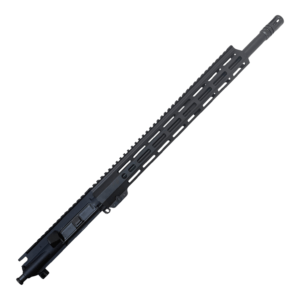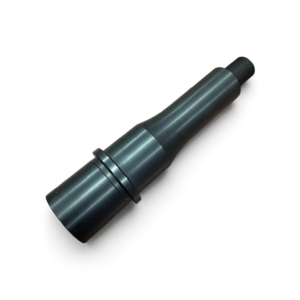
Choosing a barrel for a 9mm AR starts with how the firearm will be used. The best barrel length for 9mm depends on ammunition, intended role, legal configuration, and suppressor plans. For many AR9 builds, 8 to 10 inches balances useful velocity with manageable length. Shorter barrels keep the build compact, while 11 to 12 inches or 16 inches suit more specific setups.
Why Barrel Length Matters on a 9mm AR
Most commercial 9mm loads use relatively fast-burning powders compared with common rifle cartridges. They gain much of their useful speed in the first several inches, then continue at a slower and less predictable rate. 9mm barrel length still affects velocity and energy, but each load responds differently.
As a pistol cartridge, 9mm does not respond to additional barrel length in the same way as a typical rifle round.
The practical effects extend beyond a chronograph reading:
- Muzzle velocity and energy vary by load.
- Overall length changes how easily the firearm moves through confined spaces.
- Added steel at the front affects balance and how steady the muzzle feels.
- Short barrels usually produce more blast close to the shooter.
- Barrel length influences how much handguard and accessory space is available.
Most AR9s use direct blowback and have no gas tube. There is no gas-system length to match to the barrel. Bolt mass, buffer mass, spring choice, and ammunition affect function, but they do not determine barrel length.
Barrel length also changes the finished upper in ways that are easy to overlook. A short barrel needs a handguard that leaves the muzzle and any mount accessible. A longer one gives the support hand more room, but moves weight forward. Those differences are easy to feel even when the chronograph numbers are close.
9mm Velocity by Barrel Length
Looking at 9mm ballistics by barrel length is useful only when the same ammunition and test method are used throughout. Mixing factory ratings, handgun results, and carbine results can make a chart appear more precise than it really is.
9mm Barrel Length Chart: Representative Federal Loads
| Barrel Length | Federal 115-Grain JHP | Federal 124-Grain Hydra-Shok JHP | Federal 147-Grain Hydra-Shok JHP | General Trend |
| 4 inches | 1,094 fps | 1,061 fps | 951 fps | Short-barrel baseline |
| 6 inches | 1,188 fps | 1,131 fps | 1,030 fps | Strong early gain |
| 8 inches | 1,234 fps | 1,180 fps | 1,047 fps | Gains continue at a slower rate |
| 10 inches | 1,253 fps | 1,211 fps | 1,067 fps | Smaller, load-dependent improvement |
| 12 inches | 1,282 fps | 1,225 fps | 1,081 fps | Modest additional gain |
| 16 inches | 1,295 fps | 1,243 fps | 1,073 fps | Little gain, and not for every load |
These figures come from the archived Ballistics by the Inch test data reproduced in this 9mm velocity table. They represent specific loads, not averages for every 115, 124, or 147-grain cartridge.
The clearest gain comes early. From 4 to 6 inches, the three loads add 70 to 94 fps. Later increases are smaller, and the 147-grain load is slightly slower at 16 inches than at 12. One controlled test series cannot represent every 9mm load.
Powder, pressure, bullet construction, temperature, chamber dimensions, and barrel condition affect the result. Use the table as a comparison, then verify the ammunition selected for the build.
Choosing Between Common AR9 Barrel Lengths
Each range favors a different combination of size, balance, and performance. Intended use and legal configuration narrow the choice quickly.
4 to 6 Inches for Compact and Suppressed Builds
A 4 to 6-inch barrel keeps the front short and light. It works well when compact handling matters, but handguard and accessory space are limited. An unsuppressed blast is also more noticeable.
Velocity is lower than with the middle-length options. Heavy loads are often chosen for subsonic use, though barrel length alone does not guarantee subsonic speed. The short handguard also requires deliberate placement of the support hand, especially when the muzzle sits close to its front edge. When comparing short 9mm AR barrels, check handguard length, muzzle threads, and mounting clearance.
This range may suit compact range or home-defense configurations, especially when a suppressor would otherwise make the firearm too long.
8 to 10 Inches for a Balanced AR9
An 8 to 10-inch barrel retains much of the useful velocity shown by many loads while staying shorter than a 16-inch carbine. It also leaves enough room for a practical handguard and support-hand position.
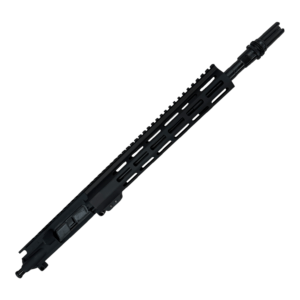
For a general-purpose build, this is often the optimal barrel length for 9mm. It suits range use, home defense, and many competition setups. When comparing 9mm upper assemblies, look at barrel and handguard dimensions together. The small difference among 8, 9, and 10 inches matters less than ammunition and fit.
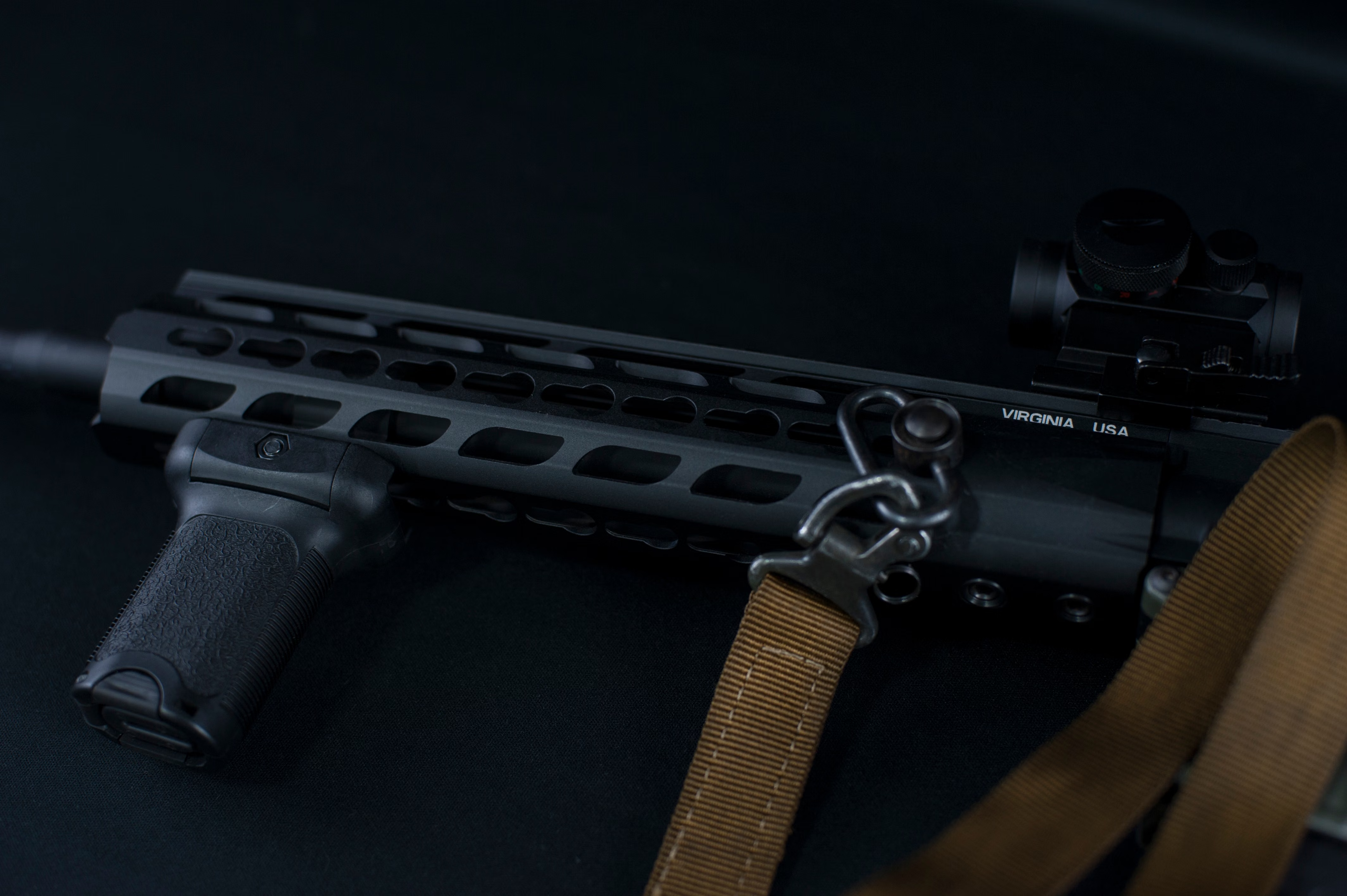
This range also gives builders more freedom with lights, hand stops, and sling hardware than most very short uppers. It remains easy to handle around barriers or inside a vehicle. For competition, confirm the division rules before buying parts, since equipment requirements differ by match.
11 to 12 Inches for Additional Performance
An 11 or 12-inch barrel adds length and front weight for modest ballistic improvement. In the table, the three loads gain only 14 to 29 fps from 10 to 12 inches.
This range can suit shooters who accept additional length for modest load-dependent velocity gains, more handguard space, and a steadier front end. The tradeoff is a less compact firearm.
Shooters with a longer reach often find the added handguard space more comfortable. The extra two inches also give a mounted light or sling point more separation from the support hand. These are fit and setup benefits, not proof of better accuracy.
16 Inches for a Full-Size Rifle Configuration
A 16-inch barrel provides a conventional rifle configuration, ample handguard space, and a steadier front end. The velocity advantage is often small. In the table, the 115-grain load gains 13 fps from 12 to 16 inches, while the 147-grain load loses 8 fps.
Choose this length for the rifle setup, accessory room, and handling, not for an assumed ballistic leap.
The full-length format also avoids placing a muzzle device close to the support hand and works with a broad range of handguard lengths. Its forward weight feels steady from a supported position, though it is slower to move through tight spaces than a short upper.
Federal classification also matters. Under current federal rules, a firearm configured as a shoulder-stocked rifle with a barrel shorter than 16 inches may be regulated as a short-barreled rifle. Overall length matters too, so check current federal, state, and local rules before assembling a firearm.
Selecting a Barrel Length for a Suppressed 9mm Build
Barrel, suppressor, handguard, and ammunition need to work as one system.
- Total length: Add the suppressor’s mounted length to the firearm.
- Balance: Account for the extra weight at the muzzle.
- Ammunition: Check the intended load at the expected velocity.
- Threads: Match the barrel thread pattern to the direct-thread mount or other approved interface.
- Clearance: Leave space between the handguard, mount, and suppressor body.
- Testing: Verify function, point of impact, and actual velocity with the chosen load.
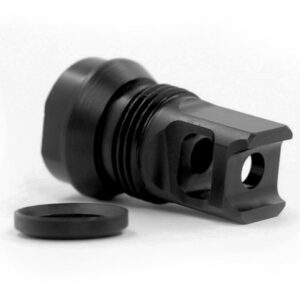
A 4 to 6-inch barrel keeps many suppressed builds compact, while an 8-inch barrel still works well with a shorter suppressor. Do not choose the shortest barrel if it compromises hand position or mounting clearance. Before using muzzle devices and mounting interfaces, confirm compatibility with the barrel and suppressor.
Check the suppressor maker’s barrel restrictions as well. Direct-thread and quick-detach mounts use different hardware, and the shoulder behind the threads must support the selected system. After assembly, check alignment before firing and watch for a shift in point of impact during the first range session.
Making the Final Choice
To decide what barrel length is best for 9mm, start with intended use and ammunition, choose the barrel range that supports them, then account for suppressor length, overall size, and legal configuration. An 8 to 10-inch barrel is the practical middle choice for many builds. Choose 4 to 6 inches for minimum length or 16 inches for a conventional rifle setup.
Frequently Asked Questions
How Much Does 9mm Drop at 100 Yards?
There is no single drop figure for 9mm at 100 yards because the answer changes with muzzle velocity, ballistic coefficient, sight height, and zero distance. A trajectory value is useful only when the load and zero behind it are clearly identified.
Does a Longer 9mm Barrel Improve Accuracy?
Not automatically. Barrel quality, ammunition consistency, the sighting system, and shooter input have more influence on mechanical accuracy, although extra velocity may slightly flatten the trajectory and make holdovers easier at distance.
What Is the Practical Range of a 9mm AR?
Practical range depends on ammunition, target size, zero distance, firearm configuration, sighting equipment, and shooter ability. It should not be confused with maximum projectile travel, which is far greater than the distance at which a 9mm AR is normally used accurately and responsibly.